Ring Size Calculator
Turn a finger measurement into a US, UK or EU ring size.
Your measurement
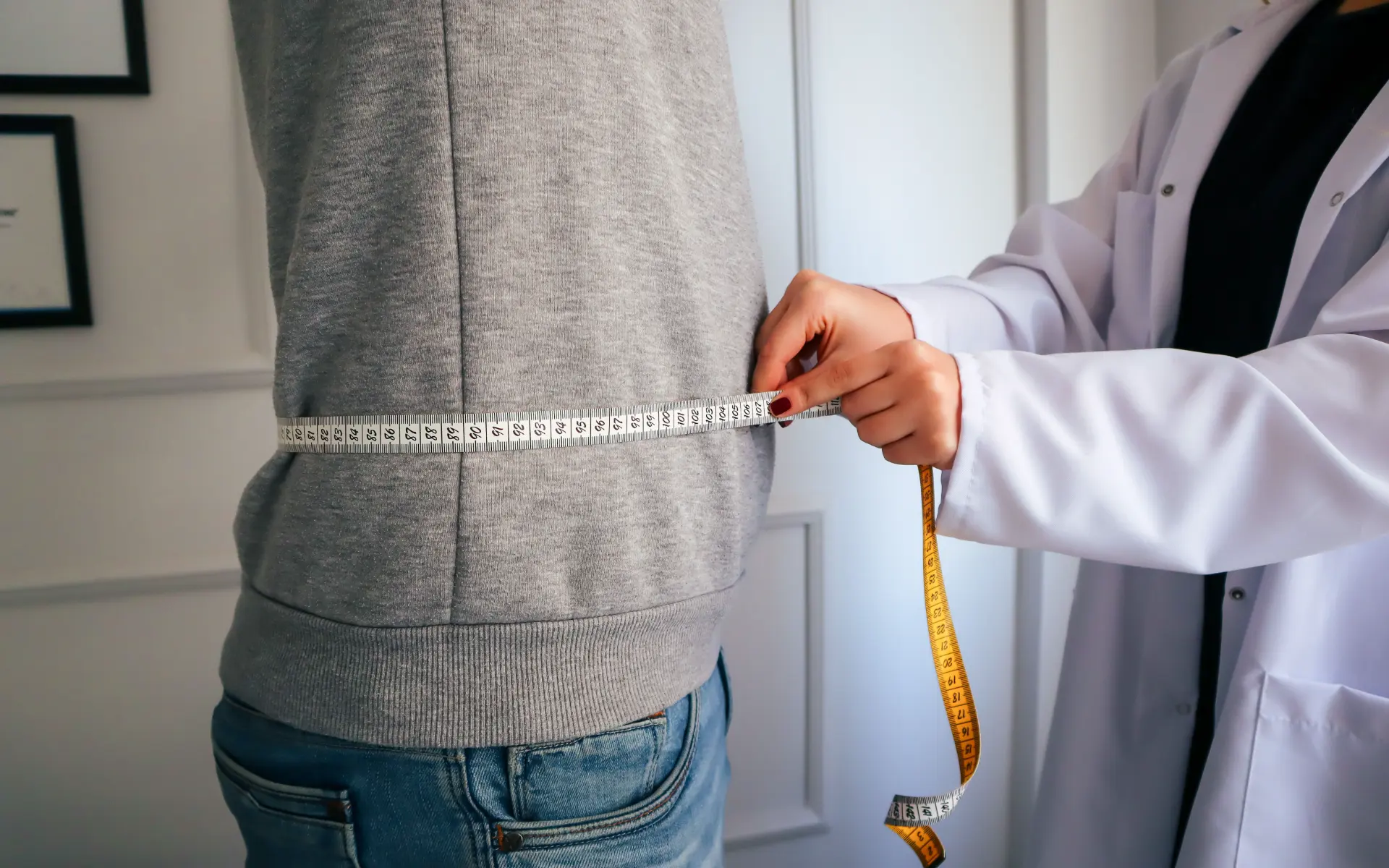
Wrap a strip of paper or a piece of string snugly round the base of the finger, mark where it overlaps, and measure the length flat.
Most adults fall between 46.8 mm and 67.2 mm
Fingers swell in heat and shrink in cold by up to half a size. Measure at the end of the day, at room temperature, and take the reading three times.
This converts between ring size and finger measurements, and between the US, UK, EU and Japanese sizing systems.
Enter a diameter or circumference in millimetres, or a size in one system, to get the equivalents.
How ring sizes are measured
Ring size is a coding of the ring's inner circumference. US size 7 has an inner diameter of about 17.3 mm and a circumference of about 54.3 mm. Each full US size adds roughly 0.8 mm of diameter, or about 2.5 mm of circumference.
Every country codes it differently. The US uses numbers with half sizes; the UK uses letters; the EU uses the circumference in millimetres directly, which is the most transparent system of the three.
The measurement problem is bigger than the conversion problem. Your fingers change size by up to a full size across a day, swelling in heat and after salt or alcohol, and shrinking when cold. Measuring at the wrong moment is the most common reason a ring does not fit.
0.8 mm of diameter separates one size from the next, which is why measuring accuracy matters more than the conversion arithmetic.
What to enter
- Finger circumference
- In millimetres, measured around the widest part of the finger. The most reliable input if measured properly.
- Inner diameter
- Of a ring that already fits, measured across the inside. The easiest accurate method available at home.
- Known size in another system
- US, UK, EU or Japanese. All of them encode the same physical circumference.
The sizing systems
- US and Canada
- Numeric with half sizes, typically 3 to 13.5. Size 7 is about 54.3 mm circumference.
- UK, Australia, Ireland
- Letters A to Z with halves. UK N/N½ is roughly US 7.
- EU (ISO 8653)
- The circumference in millimetres directly, so size 54 means 54 mm. The clearest system.
- Japan
- Numeric on a different scale from the US. Japanese 14 is roughly US 7.
- Common sizes
- US 6-7 is the most common range for women and US 9-10.5 for men, though this varies widely.
What this assumes
Conversions between systems are approximations. Manufacturers vary slightly, and half sizes do not always map cleanly across systems.
Wide bands fit more tightly than narrow ones at the same nominal size. A band over about 6 mm wide usually needs a half size up.
How to calculate your ring size
Measure a ring you already own if you can. It is more reliable than measuring the finger.
- diameter
- The inner diameter of the ring in millimetres
- circumference
- What every sizing system ultimately encodes
Measure an existing ring if possible. Place it over a printed size chart, or measure the inner diameter with calipers. Far more reliable than measuring a finger.
Otherwise measure the finger properly. Use a thin strip of paper rather than string, which stretches. Wrap it around the widest part, mark where it meets, and measure the length in millimetres.
Measure at the right time. Late in the day at normal room temperature, when fingers are at their typical size. Not first thing, not when cold, not after exercise.
Check it clears the knuckle. The ring has to pass the knuckle and then sit comfortably. If your knuckle is much larger than the base of the finger, size for the knuckle and consider a sizing bead.
See a worked example: converting a measurement
- Measured circumference
- 54 mm
54 mm circumference is about 17.2 mm diameter, since diameter is circumference ÷ π.
That is US size 7, UK N/N½, and EU size 54 — the EU number is just the circumference.
One size down, US 6, is 51.8 mm; one up, US 8, is about 56.9 mm.
Only 2.5 mm separates adjacent sizes, which is why a stretched piece of string can easily put you a full size out.
US 7, UK N/N½, EU 54
Frequently asked questions
- How do I measure my ring size at home?
The most reliable way is to measure a ring that already fits: place it over a printed size chart, or measure its inner diameter.
To measure the finger, use a thin strip of paper, not string. String stretches, and 2.5 mm of stretch is a full size. Wrap it snugly, mark where it overlaps, and measure the length in millimetres.
- When is the best time to measure?
Late in the day, at normal room temperature. Fingers are smallest in the morning and in the cold, and largest in heat, after exercise, and after salty food or alcohol.
The variation can be up to a full size. Measuring on a cold morning is a reliable way to end up with a ring that will not fit in July.
- How do I convert between US and UK sizes?
UK uses letters and US uses numbers, and both encode the same circumference. UK N/N½ is roughly US 7, and UK L is roughly US 6.
The EU system is easiest to reason about, since the size number is the circumference in millimetres. EU 54 means 54 mm.
- What if my knuckle is bigger than my finger?
Size for the knuckle, since the ring has to get past it, then address the looseness at the base.
Jewellers can fit sizing beads or a small internal bar, which hold the ring in place without affecting how it passes the knuckle. This is a common and easily solved problem.
- Does band width affect the size?
Yes. Wider bands fit more tightly, because more of the ring is in contact with the finger.
For a band over about 6 mm wide, go up a half size. For very wide bands, a full size up is sometimes needed.
- Can rings be resized?
Most gold and silver rings can be resized by a jeweller, usually within a couple of sizes in either direction.
Some cannot: tungsten, titanium, ceramic and rings with stones set all the way around the band. If a ring is a surprise gift and made from one of those, getting the size right first time matters a great deal.
Problems people actually run into
Measuring with string
String stretches under tension, and 2.5 mm of stretch is a full ring size. It is the most common cause of a wrong measurement.
Use a thin strip of paper instead, or measure an existing ring. Paper does not stretch and gives a repeatable result.
Measuring once, in the wrong conditions
Fingers swell in heat and after salt or alcohol, and shrink in cold. A single measurement first thing on a winter morning can be a full size below your real size.
Measure two or three times on different days, late in the day at normal temperature, and take the largest sensible reading.
Results are estimates for general information only and are not professional financial, medical, or legal advice. Read our full disclaimer.
Last updated: September 4, 2026