BMI Calculator
Work out your body mass index, see the band it falls in, and find the healthy weight range for your height.
Your measurements
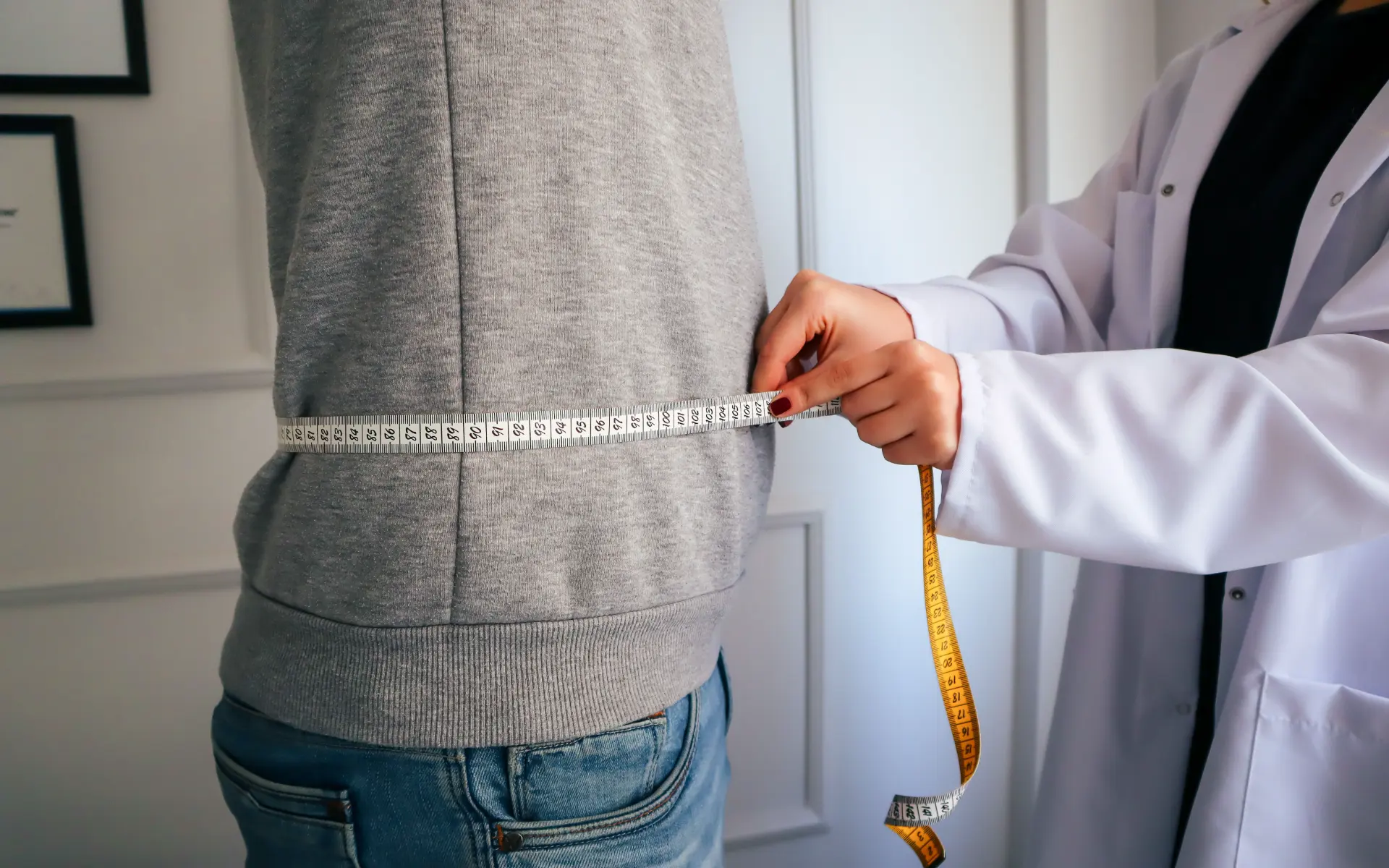
BMI is a screening tool, not a body-composition measurement. It cannot tell muscle from fat, so it reads a lean, heavily built athlete as overweight and can miss excess fat on someone light. Waist measurement and body-fat percentage say more about health risk than BMI alone.
This works out body mass index from your height and weight, and shows which category it falls into.
BMI is a screening tool for populations. It says nothing about body composition, so read the caveats alongside the number.
What BMI measures, and what it does not
Body mass index is weight divided by height squared. That is the entire calculation. It was designed in the 1830s as a way of describing populations, and it is still used because it needs only two numbers anyone can measure.
The categories are under 18.5 underweight, 18.5-24.9 normal, 25-29.9 overweight, and 30 or above obese. Someone 1.75 m tall weighing 70 kg has a BMI of 22.9.
What it cannot see matters as much as what it reports. BMI does not know the difference between muscle and fat, it does not know where fat sits on your body, and it was derived from European populations of the time. A muscular person at 90 kg and 1.75 m scores 29.4 and is classed overweight while carrying very little fat.
The 29.4 could be a lean athlete or someone carrying substantial fat. BMI reports the same number for both, which is precisely its limitation.
What to enter
- Height
- Squared in the formula, so it dominates. A small measurement error moves the result more than you would expect.
- Weight
- Total body weight, including muscle, bone, fat and water. BMI cannot separate them.
- Units
- Metric uses kg ÷ m². Imperial multiplies by 703 to convert, since lb/in² would otherwise give the wrong scale.
BMI categories for adults
- Under 18.5
- Underweight. Worth discussing with a doctor, particularly if unintentional.
- 18.5 to 24.9
- Normal weight, as defined for populations.
- 25.0 to 29.9
- Overweight. The band where muscular people are most often misclassified.
- 30.0 and above
- Obese, sometimes split into class I, II and III.
- Children and teenagers
- Use age- and sex-specific percentiles, not these adult categories.
What this assumes
BMI assumes weight scales with height squared, which holds reasonably across a population and less well for individuals at the extremes of height.
The categories were derived largely from European-ancestry populations. Some health bodies use lower thresholds for people of South and East Asian ancestry, where risk rises at a lower BMI.
How to calculate your BMI
One division in metric; one extra constant in imperial.
- m²
- Height in metres, squared
- 703
- The conversion constant that makes pounds and inches give the same scale as kg and metres
Measure height accurately. Without shoes, standing straight. Height is squared, so an error here counts twice over.
Square the height. 1.75 m becomes 3.0625.
Divide weight by it. 70 ÷ 3.0625 = 22.9. In imperial, multiply by 703 first: 703 × 154 ÷ 69² = 22.7.
Read the category, then read the caveats. If you carry substantial muscle, check body fat or waist circumference instead. BMI on its own will mislead you.
See a worked example: why the same number means different things
- Person A
- 70 kg at 1.75 m
- Person B
- 90 kg at 1.75 m
A: 70 ÷ (1.75)² = 70 ÷ 3.0625 = 22.9, in the normal band.
B: 90 ÷ 3.0625 = 29.4, classed overweight.
But B could be a rugby player at 12% body fat or someone carrying 30 kg of excess fat. BMI reports 29.4 either way.
Waist circumference or a body fat estimate separates those two cases, and BMI never can.
22.9 and 29.4, from height and weight alone
Frequently asked questions
- Is BMI accurate?
For populations, it is a useful and well-validated screening measure. For individuals, it is a rough indicator that can be badly wrong.
It misclassifies muscular people as overweight, and it can classify someone with low muscle and high fat as normal. It is a starting point, not a diagnosis.
- Why is BMI unreliable for athletes?
Muscle is denser than fat, so a muscular person weighs more for the same size. BMI sees only the weight.
A 90 kg athlete at 1.75 m scores 29.4, one point from the obese category, while carrying very little fat. Use body fat percentage instead.
- What is a healthy BMI?
18.5 to 24.9 is the standard adult range. Some health bodies apply lower thresholds for people of South and East Asian ancestry, where metabolic risk rises at a lower BMI.
Waist circumference adds information BMI cannot: fat around the abdomen carries more health risk than the same fat elsewhere, and BMI is blind to where it sits.
- Does BMI work for children?
Not with the adult categories. Children's BMI is interpreted against age- and sex-specific percentiles, because body composition changes throughout growth.
A child's BMI is compared with others of the same age and sex rather than against fixed numbers. Use a paediatric growth chart, not this scale.
- What should I use instead?
No single number replaces it, and a combination works better. Waist circumference captures abdominal fat, waist-to-hip ratio captures distribution, and body fat percentage captures composition.
BMI is still worth having as a fast first check. The mistake is treating it as the whole picture rather than the first line of it.
- Why is the imperial formula multiplied by 703?
Because pounds per square inch and kilograms per square metre are different scales. The 703 converts between them so both give the same BMI.
It comes from the conversion factors: 1 kg is 2.205 lb and 1 m is 39.37 in, and 39.37² ÷ 2.205 works out to about 703.
Problems people actually run into
Reading the category as a verdict on health
BMI knows two numbers. It does not know your body composition, your fitness, your blood pressure or where your fat is distributed.
Someone at 26 who trains regularly with good bloodwork is in better health than someone at 23 who does not. The category is a prompt to look further, not a conclusion.
Tracking BMI instead of what changed
Someone gaining muscle and losing fat can see their BMI stay flat or rise, and conclude nothing is working when the composition has improved substantially.
Track waist circumference, how clothes fit, and strength alongside weight. Those pick up changes BMI cannot see.
Results are estimates for general information only and are not professional financial, medical, or legal advice. Read our full disclaimer.
Sources
- About Adult BMI · Centers for Disease Control and Prevention
Last updated: September 4, 2026