Army Body Fat Calculator
Check your body fat against the U.S. Army AR 600-9 tape-test standard for your age and sex.
Your measurements
This reproduces the circumference (tape) method AR 600-9 uses for the Army Body Composition Program. It is an unofficial estimate: an official measurement is taken three times by trained personnel and averaged, and the height and weight screening table is applied first. Check the current regulation for the standard in force.
This estimates body fat percentage using the military circumference method, from tape measurements and height.
It is the same tape-test approach used across the US services, and it is an estimate rather than a measurement.
The military tape test
The military tape test estimates body fat from circumference measurements rather than from any direct measurement of fat. It exists because it is cheap, fast and repeatable across thousands of people, not because it is the most accurate method available.
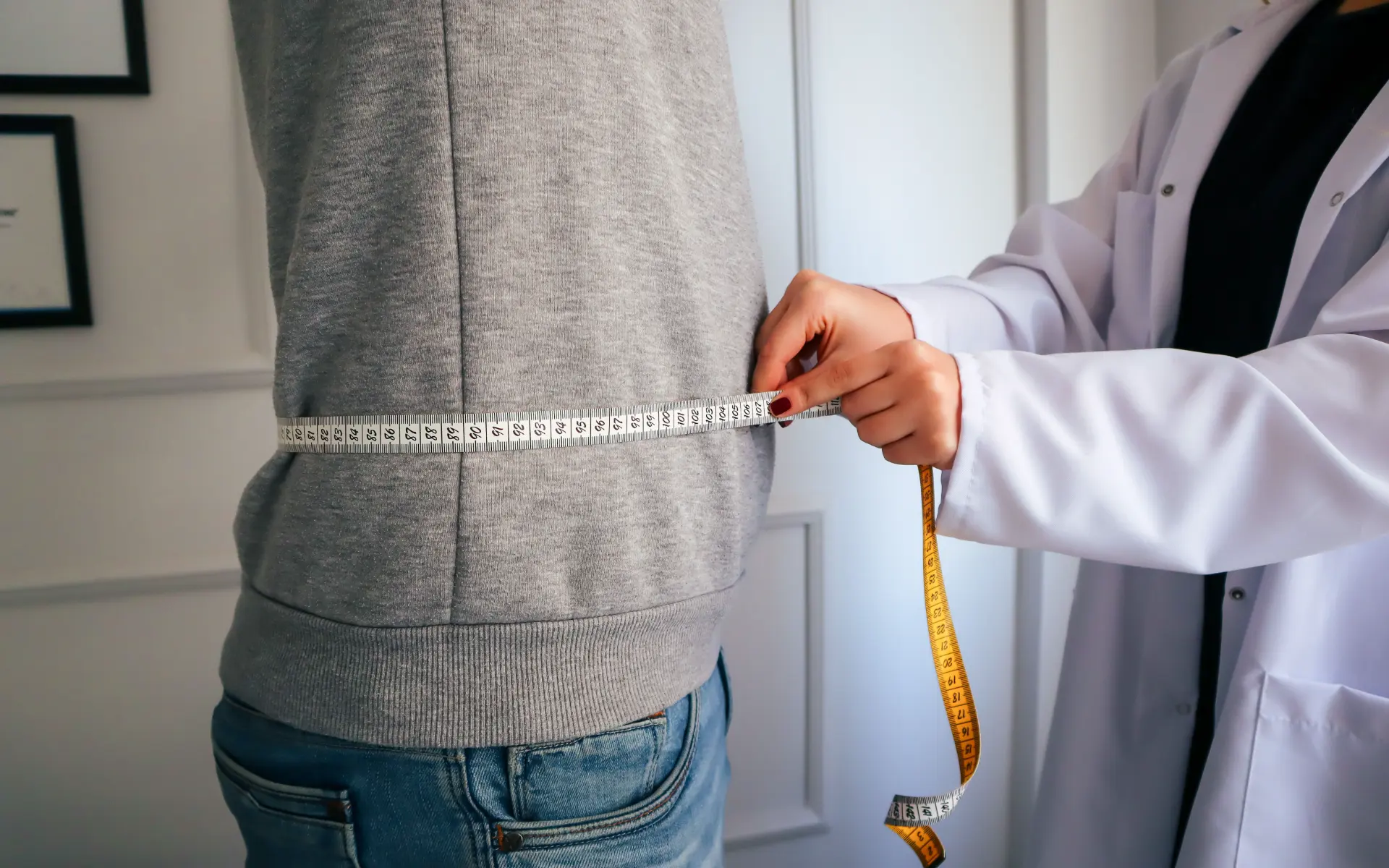
The traditional formula uses waist and neck for men, and waist, hip and neck for women, together with height. Larger waist relative to neck means a higher estimate.
Two things have changed recently and are worth knowing. The Army moved to a single abdominal circumference measurement in 2023, replacing the multi-site tape test. And soldiers who exceed the standard can now request a supplemental body composition assessment such as DEXA, InBody or BodPod, which is considerably more accurate.
Women's measurements also include hip circumference. The formula infers fat from proportions; it never observes it directly.
What to enter
- Height
- Measured without shoes. It scales the whole calculation, so an error here moves the result meaningfully.
- Neck circumference
- Measured just below the larynx, with the tape sloping slightly downward at the front. A thicker neck lowers the estimate.
- Waist / abdominal circumference
- The measurement that dominates the result. Taken at the navel for men in the traditional method, and at the narrowest point for women.
- Hip circumference
- Women only, at the widest point of the buttocks.
How the methods compare
- Tape test (circumference)
- Free, fast, repeatable. Error against gold-standard methods is commonly cited at several percentage points.
- Skinfold calipers
- More accurate in trained hands, and highly dependent on the person taking the measurement.
- Bioelectrical impedance (InBody and similar)
- Quick and non-invasive. Sensitive to hydration, so results move with how much you have drunk.
- DEXA
- Among the most accurate available, and it also reports where the fat is. Requires a scan appointment.
- Hydrostatic and BodPod
- Very accurate, and limited by access to the equipment.
What this assumes
The circumference method infers body fat from proportions. It cannot distinguish muscle from fat and systematically misreads people at the extremes of build.
Service standards and methods are set by regulation and change. AR 600-9 is the authority for the Army, and each service sets its own.
How to calculate body fat by the circumference method
Measure carefully, then apply the formula for your sex. Measurement error matters more here than the arithmetic does.
- waist − neck
- In inches. This difference is what drives the result
- height
- In inches
- women
- Uses (waist + hip − neck) with different coefficients
Measure at the right landmarks. Neck just below the larynx; waist at the navel for men and at the narrowest point for women; hip at the widest point.
Keep the tape level and snug. Snug without compressing the skin. Half an inch of tension difference can move the result by more than a percentage point.
Take three measurements and average them. This is what the services do, and it is worth copying. Single measurements are noisy.
Apply the formula. Or read the result here. The arithmetic is the easy part; the measuring is where the error lives.
See a worked example: two worked measurements
- Man
- 38 in waist, 16 in neck, 70 in height
- Woman
- 32 in waist, 40 in hip, 13 in neck, 65 in height
Man: 86.010 × log₁₀(38 − 16) − 70.041 × log₁₀(70) + 36.76 = 23.0%.
Woman: using the female equation with waist + hip − neck = 59 in, the result is 33.5%.
Notice how sensitive it is: if that man's waist measured 39 in instead of 38, the estimate rises to 24.6%.
That is why the services average three measurements, and why a single reading close to a standard is worth re-taking.
23.0% and 33.5%
Frequently asked questions
- How accurate is the tape test?
It is a reasonable population screen and a rough individual estimate. Validation work against DEXA commonly finds errors of several percentage points in either direction.
It is least accurate at the extremes. Very muscular people with thick waists read high, and lightly-built people with low muscle mass can read lower than they are.
- Did the Army change its body fat standards?
Yes. In 2023 the Army moved to a single abdominal circumference measurement, replacing the multi-site neck/waist/hip tape test, and it also added supplemental assessments.
Soldiers who exceed the tape standard may request a DEXA, InBody or BodPod assessment instead. Check the current version of AR 600-9 for the standards that apply to you, since they are updated.
- Why do muscular people fail the tape test?
Because the formula infers fat from a waist measurement and cannot tell muscle from fat. A lifter with a thick, muscular midsection reads as having more body fat than they do.
This is exactly why the supplemental assessment route exists. If you are muscular and near the limit, a DEXA or BodPod is worth requesting.
- How should I measure the neck and waist?
Neck: just below the larynx, tape sloping slightly downward at the front, not pulled tight. Waist: at the navel for men, at the narrowest point for women.
Measure at the end of a normal exhale, standing relaxed. Do not suck in, and do not measure over clothing. Consistency between measurements matters more than any single reading.
- Can I lower my tape test result quickly?
Not meaningfully, and attempts to game it usually fail. Neck size barely changes, and waist size reflects actual body composition.
Reducing bloating and measuring properly hydrated and rested can shift a reading slightly. Real change comes from a sustained calorie deficit with resistance training, which takes months rather than days.
- How does this differ from the Navy method?
The underlying circumference equations are the same family, and the services differ in landmarks, rounding rules and the standards applied.
The Army's 2023 move to a single abdominal measurement is the largest recent divergence. Use your own service's current regulation for anything official.
Problems people actually run into
Sloppy measurement
A one-inch difference in the waist reading moves the estimate by more than a percentage point. Tape tension, position and posture all contribute.
Take three measurements at the same landmarks and average them. If a reading sits close to a standard that matters to you, re-measure on another day before accepting it.
Treating the estimate as a measurement
The tape test infers body fat from proportions. It is a screening tool designed for administrative use at scale, not a precise assessment of an individual.
If the number matters, whether for a career or for training, get a DEXA or BodPod. The difference between an estimate and a measurement is worth the appointment.
Results are estimates for general information only and are not professional financial, medical, or legal advice. Read our full disclaimer.
Sources
- AR 600-9, The Army Body Composition Program · US Army Publishing Directorate
Last updated: September 4, 2026